Facilities management teams responsible for large, multi-building workplaces often encounter the same recycling issues day after day.
Bins are in place, signage has been installed, and expectations are clearly set, yet confusion persists. People hesitate, waste streams are used inconsistently, and contamination increases quietly across sites.
These patterns rarely point to a lack of effort. They usually indicate that the recycling system itself is asking too much of the people using it.
This challenge is explored in more depth in the Guide To Increasing Workplace Recycling, which looks at how system design influences everyday behaviour across commercial workplaces.
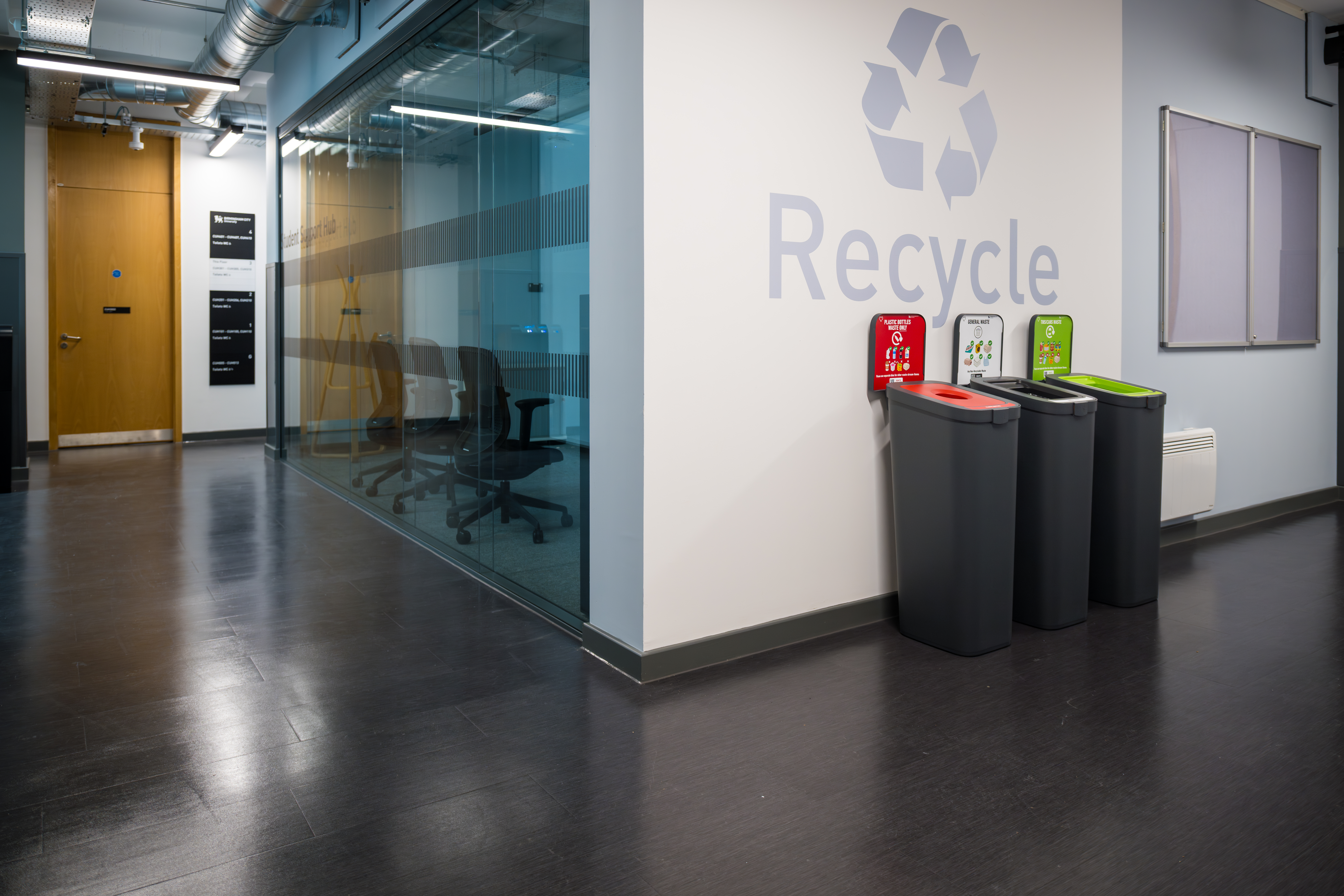
Recycling Decisions Are Made Under Pressure
In busy commercial environments, recycling decisions happen quickly. People are moving between meetings, juggling tasks, and disposing of waste while distracted. In these moments, behaviour relies on recognition and confidence rather than instructions.
When a recycling setup requires interpretation, uncertainty creeps in. When layouts vary between buildings, confidence drops further. Over time, these small moments of doubt compound into daily confusion across the workplace.
This is why Unisort designs recycling systems around clarity at the point of disposal, using consistent visual logic across ranges such as Unisort Aspire and Unisort Climate, where streams, signage and layout are designed to reduce hesitation rather than add to it.
Consistency Builds Confidence At Scale
Consistency plays a central role in reducing confusion across large estates. When recycling systems look and function the same across all buildings, people begin to recognise the waste streams without consciously thinking about them.
Very specific waste streams, familiar signage layouts, and predictable placement patterns reduce the need to relearn behaviours. As familiarity and engagement grows, accuracy improves.
For FM teams managing multiple sites, consistency becomes an operational advantage rather than a design choice.
For smaller or space-constrained areas such as meeting rooms and offices, compact recycling stations like Unisort Pura help maintain this consistency without compromising layout or aesthetics.

Clarity Matters At The Point Of Disposal
Awareness campaigns and reminders can support recycling behaviour, but clarity at the point of disposal has a far greater impact.
When people approach a recycling station, the signage and waste streams need to communicate the right choice instantly.
Clear signage, specific waste streams, and intuitive visual cues (graphics, icons, examples of recyclables) help guide decisions without slowing people down. Recycling stations that feel simple to use tend to perform better because they align with how decisions are actually made in real workplaces.
Unisort’s approach to signage hierarchy and stream definition is reinforced through Workplace Recycling Engagement Training Sessions, which help teams understand how people interact with recycling systems in practice and why they should care about making a difference.
Placement Shapes Everyday Behaviour
The physical location of recycling stations strongly influences how they are used. Recycling stations positioned along natural movement & highly frequented routes tend to perform more reliably than those placed based on convenience or available space.
FM teams who observe how people move through a workplace are more likely to detect opportunities to remove confusion. Placing recycling stations where waste is generated and disposed of naturally supports consistent behaviour without the need for additional intervention.
Where timelines are tight and consistency needs to be achieved quickly across sites, solutions such as the Fast-Track Delivery Range can help standardise layouts without delaying delivery.
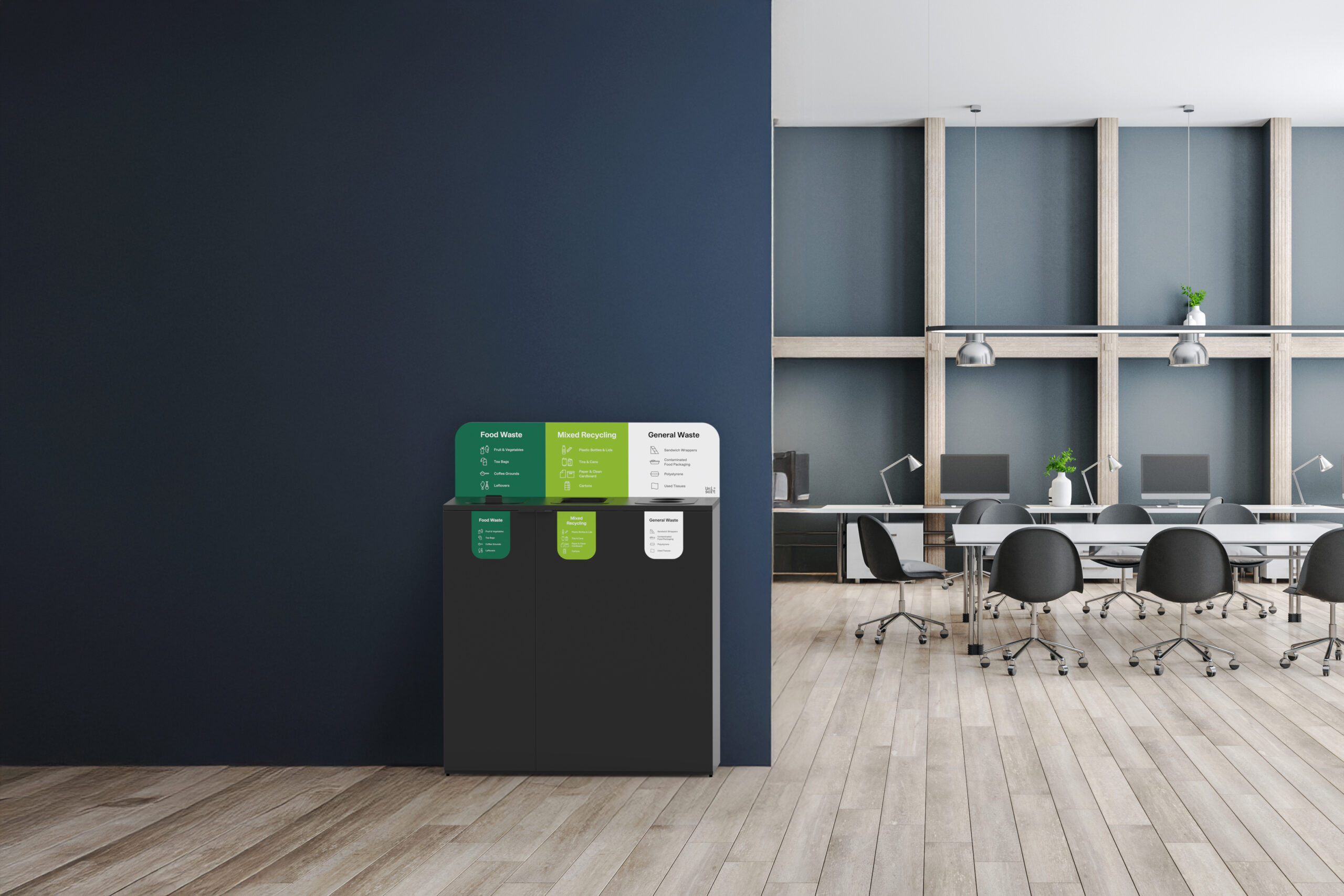
Designing Systems That Remove Confusion
Daily recycling confusion is rarely resolved by asking people to pay more attention. It is reduced through thoughtful recycling station design that supports correct waste segregation.
Clarity reduces hesitation. Consistency reinforces understanding. Effective placement removes system strain. Visibility enables refinement. When these elements work together, recycling systems become easier to use and easier to manage across workspaces.
For FM teams, success lies in creating environments where the correct choice feels natural every time. When systems support how people work and move, recycling performance improves steadily and sustainably.
To explore this thinking in more detail, the Guide To Increasing Workplace Recycling provides a practical framework for designing recycling systems that improve recycling performance across any workspace!
For help designing a recycling “binfrastructure” that works across your workplaces, get in touch.