Workplace recycling rules in Wales have been moving steadily in one direction for several years. Clearer separation, fewer grey areas, less reliance on mixed waste streams and guessing at the point of disposal.
From 6 April 2026, the next step comes into force. Workplaces in Wales will need to separate small waste electrical items for recycling, not just unsold electricals, but the everyday items that quietly pass through offices, facilities stores, and shared spaces.
For many organisations, this is not a complex change. It is a behavioural one, where recycling system clarity is what makes efficient waste separation possible.

What Counts As Small Waste Electricals
Small waste electrical items are defined as anything with a plug, battery, or cable that measures 50cm or less on every side.
This includes items most workplaces replace without much thought:
- Chargers and cables
- Keyboards, mice, and desk phones
- Kettles and toasters in staff kitchens
- Lighting, small power tools, and similar equipment.
These items are rarely treated as a formal waste stream. They are small, replaced casually, and usually end up in the nearest disposal point. Without a clear Electricals waste stream in place, they are easily mixed into general waste by default.
Where waste electrical items are classed as hazardous, they must be handled in line with the Hazardous Waste (England and Wales) Regulations 2005. If there is any uncertainty, it is best to treat the item as hazardous and seek guidance from your waste contractor to ensure it is managed safely.
Organisations are responsible for appointing a suitably licensed and reputable waste carrier, and for ensuring that small waste electrical items are collected, stored, and recycled in accordance with legal requirements.
Why Small Electricals Get Missed
Small electricals usually fail what many facilities teams call the “bin test”. They are not bulky enough to trigger a managed disposal process, not obvious enough to stand out as recyclable waste, and without a dedicated waste stream they are easily lost in general waste.
In busy workplaces, decisions happen quickly. If the recycling system doesn’t cause intuitive action, people fall back on habit. That is why the April 2026 change is less about awareness and more about system clarity at the point of disposal.
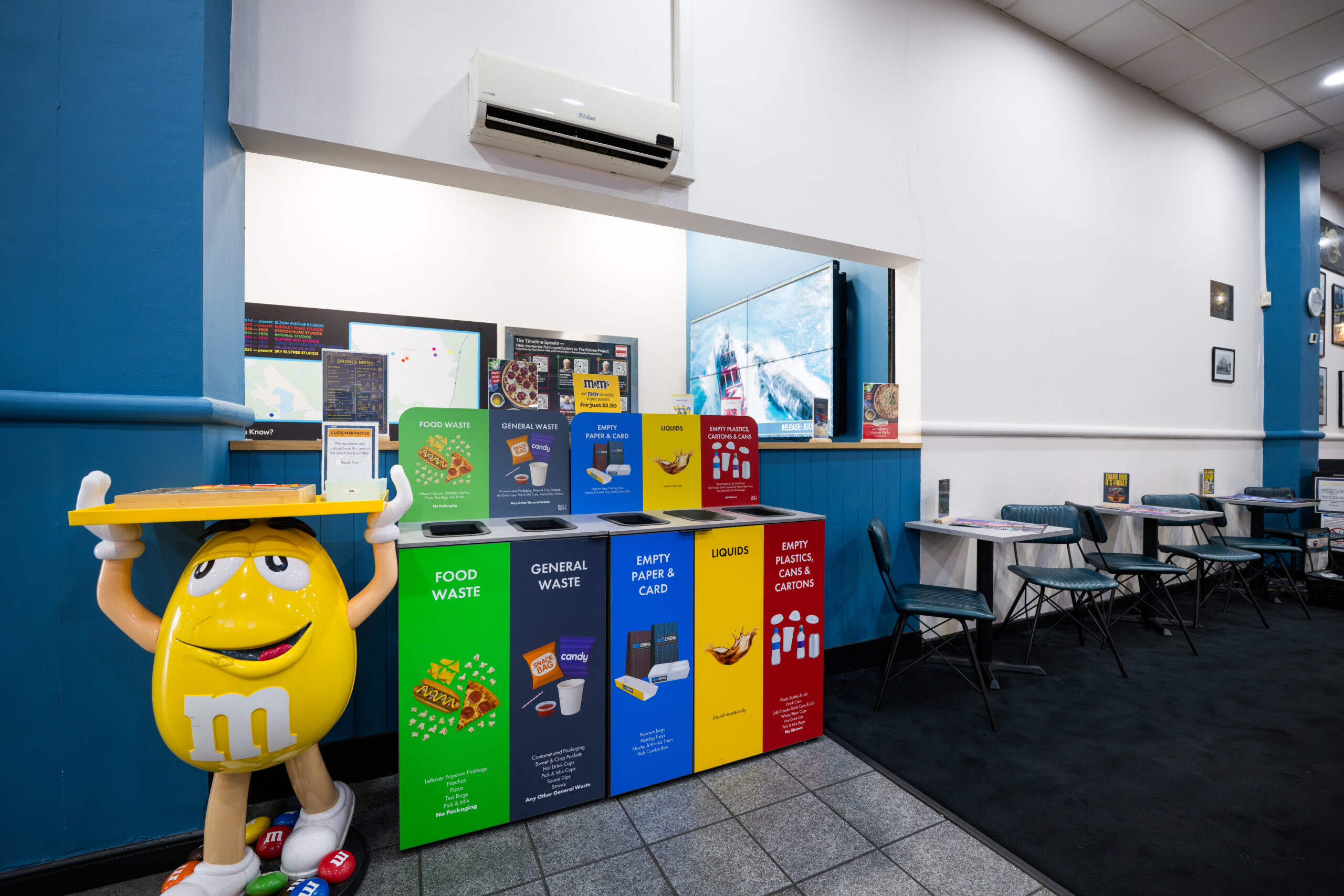
Designing a bespoke recycling system helps maximise recycling efficiency while supporting ongoing compliance.
The Approach Encouraged In Wales
Welsh guidance promotes a simple hierarchy.
Repair or reuse items where possible. Redeploy internally, donate where policy allows, or use approved refurbishment routes.
This reflects a wider policy intent in Wales to reduce unnecessary disposal by encouraging repair, redeployment, and reuse before recycling wherever possible.
Where that is not appropriate, dispose of small electricals (sWEEE) in a specific waste stream, separate from other recyclables.
It is also recommended to check used bin take-back schemes, which can help remove outdated or non-compliant bins and replace them with design-led recycling stations in a coordinated delivery.
The intent is not to add complexity, but to remove uncertainty.
How This Fits With Existing Workplace Recycling Rules
The small electricals requirement is part of the wider workplace recycling framework already in place in Wales, which expects separation of key recyclable materials and includes clear disposal bans. Find out more.
From April 2026, think of this change as adding a dedicated waste stream for small electricals. Not replacing what already works, but closing a gap that has historically allowed valuable materials to be lost in general waste.
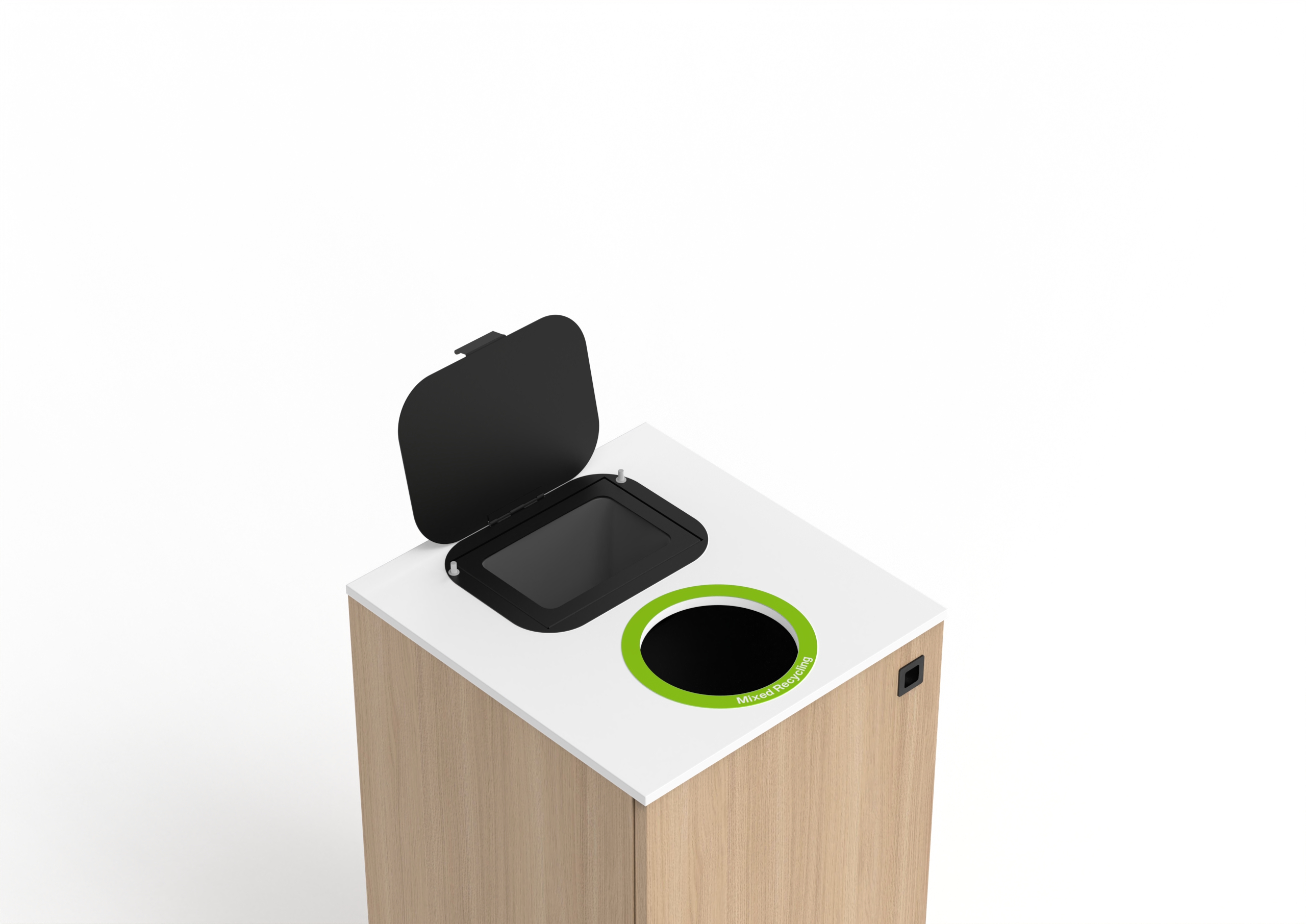
If you have already upgraded your ‘binfrastructure’, single waste stream options are also available and can be tailored to your branding, layout, and aesthetic requirements.
What Preparing Early Usually Looks Like
In practice, most organisations find this change manageable when it is designed into the recycling system ahead of time.
That usually starts with identifying where small electricals naturally appear on site. IT rooms, facilities and maintenance stores, shared kitchens, and comms areas are common capture points.
From there, sites either introduce a clearly labelled single waste stream Electricals recycling point, or upgrade existing recycling stations to include a dedicated Electricals waste stream.
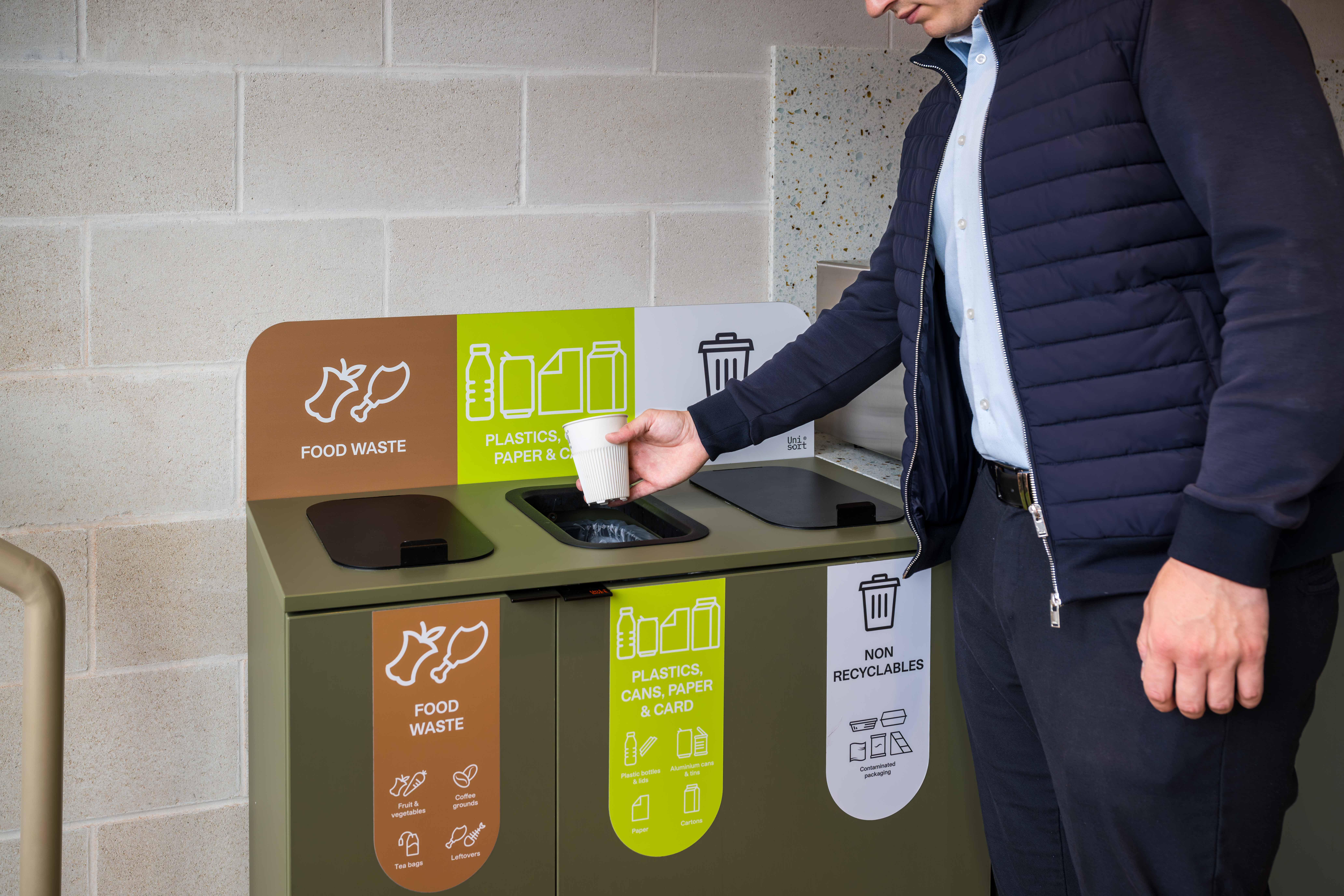
The key is clarity. Labels should use icons or examples people recognise, with colour-coded waste streams and clear, familiar terms.
Finally, it is important to confirm how the recyclables will be stored, collected, and recorded by your waste partner. Clear evidence routes reduce mistakes and support compliance, audits, and reporting.
Clear recording also supports audit readiness and ESG reporting, particularly for organisations tracking resource recovery and waste diversion.

Explore Stack
A Simple Checklist for Small Electricals Compliance (Wales, April 2026)
For teams preparing sites in Wales, the following checklist covers the essentials:
- One clearly labelled, very specific small Electricals collection point/waste stream
- A simple “repair / reuse / recycle” reminder
- Clear icon examples on signage (chargers, cables, keyboards, kettles)
- A nominated owner for the electricals stream
- A planned collection or take-back route
Why Recycling Engagement Is Essential
Even with a well-designed recycling system that supports intuitive action, some people will still be unsure why recycling matters or how their everyday waste disposal decisions affect business performance. Clear, practical engagement training helps bridge that gap by linking correct recycling behaviour to operational efficiency, compliance, and cost control, rather than abstract sustainability goals.
Workplace Recycling Engagement Training Sessions help teams understand what belongs in the Electricals waste stream, why it matters, and how the recycling system supports compliance without adding friction to day-to-day work. When people understand the logic behind the setup, contamination drops and confidence increases.
This is particularly important in multi-site environments, where consistency supports correct behaviour without constant reminders.
Learning From Recycling Changes In England
Facilities teams in England will recognise the pattern. The Simpler Recycling Regulations, introduced in March 2025, focused on consistency, clearer waste separation, and recycling systems that remove confusion.
The lesson from those changes was clear. When recycling systems are designed around real behaviour, not ideal behaviour, compliance becomes easier to manage and performance improves quietly over time.
The Welsh approach follows the same logic.
Looking Ahead To Future Phases
Welsh Government has also signalled that workplace recycling reform is phased. Further requirements, including textiles and plastic film, are expected from April 2027, alongside updates linked to the expiry of exemptions in certain sectors.
Designing recycling systems with clarity and flexibility now makes future changes far easier to absorb, without repeated disruption or re-education cycles.
Welsh Government has also referenced updates linked to the expiry of certain exemptions, including for hospitals and regulated environments. For organisations operating in complex or highly regulated settings, early planning is particularly important, as waste flows are harder to change quickly.
The Takeaway
The April 2026 requirement is not a complicated change, but it is an important one. It is about giving small electricals a clear, visible route so the correct choice feels intuitive every time.
When recycling systems support how people actually work and move through a space, compliance improves, contamination falls, and facilities teams spend less time dealing with avoidable issues.
If you would like support mapping waste flows, reviewing your current setup, or designing a practical and flexible recycling system that works across your sites, Unisort can help. Get in touch.
Get the Welsh Recycling Regulations Guide (Add link)