

Many Facilities Managers invest significant time and effort into improving workplace recycling. However, contamination, inconsistent recycling habits and overflowing general waste remain common workplace challenges.
Usually the issue is relying on standard recycling bins that weren’t designed around the size, layout or waste generation patterns of large buildings.
As workplaces become more complex, recycling stations need to do more than simply collect waste. They need to guide behaviour, improve consistency and make the right choice easy.
This is why many organisations are moving beyond standard recycling bins and adopting customised recycling stations that reflect how people actually use their buildings.
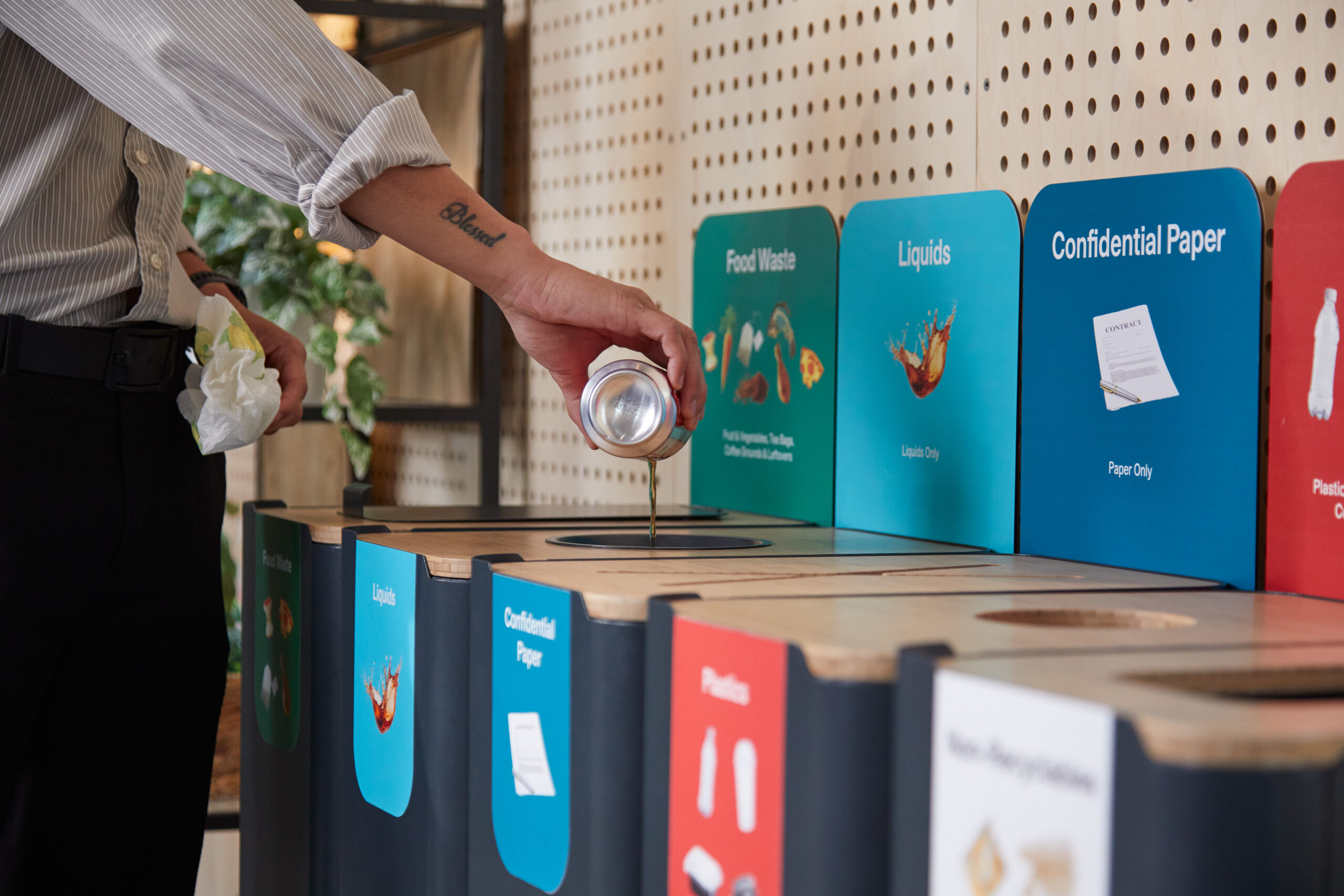
Unisort Circula Recycling Station
Every Area Of A Building Generates Different Waste
Large buildings rarely produce the same type of waste in every location.
A staff kitchenette generates different waste to a meeting room. A reception area has different recycling requirements to a print room Universities, healthcare facilities, commercial offices and manufacturing sites all produce unique waste streams throughout the day.
Yet many organisations continue to install identical recycling bins across every floor.
While this may seem like the simplest solution, it often creates confusion and increases contamination.
The most effective recycling systems are designed around where waste is generated, not around a standard bin specification.
Standard Recycling Bins Don’t Reflect Workplace Behaviour
Employees make disposal decisions in seconds.
Someone leaving a meeting wants to dispose of a coffee cup quickly.
A member of staff preparing lunch may have food packaging, drinks containers and food waste.
Someone collecting paperwork from the printer is likely to dispose of paper and cardboard.
These behaviours happen naturally throughout the day.
When every recycling bin looks the same, employees are expected to stop and think about where each item belongs.
If someone hesitates before disposing of an item, the likelihood of contamination increases.
The best recycling stations remove that hesitation by making the correct choice obvious.
Visibility Influences Recycling Performance
Many organisations believe improving recycling simply means installing more recycling units.
In reality, where recycling stations are positioned often has a much greater impact.
If recycling stations are hidden under desks, inside cupboards or away from where waste is generated, participation naturally falls.
People tend to choose the easiest option available.
Positioning recycling stations in visible, high-use areas helps encourage consistent recycling behaviour.
Typical locations include:
- Kitchenettes and tea points
- Breakout spaces
- Main walkways
- Shared workspaces
- Print and copy areas
- Meeting room hubs
- Entrances and exits
When recycling is visible, it becomes part of the workplace rather than something employees have to search for.
One Size Rarely Fits Every Workplace
Large organisations often manage several floors, departments or buildings.
Each area may generate different materials and require different waste streams.
For example:
- Food waste is more common in kitchens and dining areas.
- Paper recycling is often needed near printers.
- Coffee cup recycling may be appropriate in breakout spaces.
- Reception areas often require recycling stations that complement the surrounding interior.
Using identical recycling bins everywhere can make it more difficult for employees to recycle correctly.
Bespoke or customised recycling stations allow organisations to match recycling infrastructure to the way each area is used.
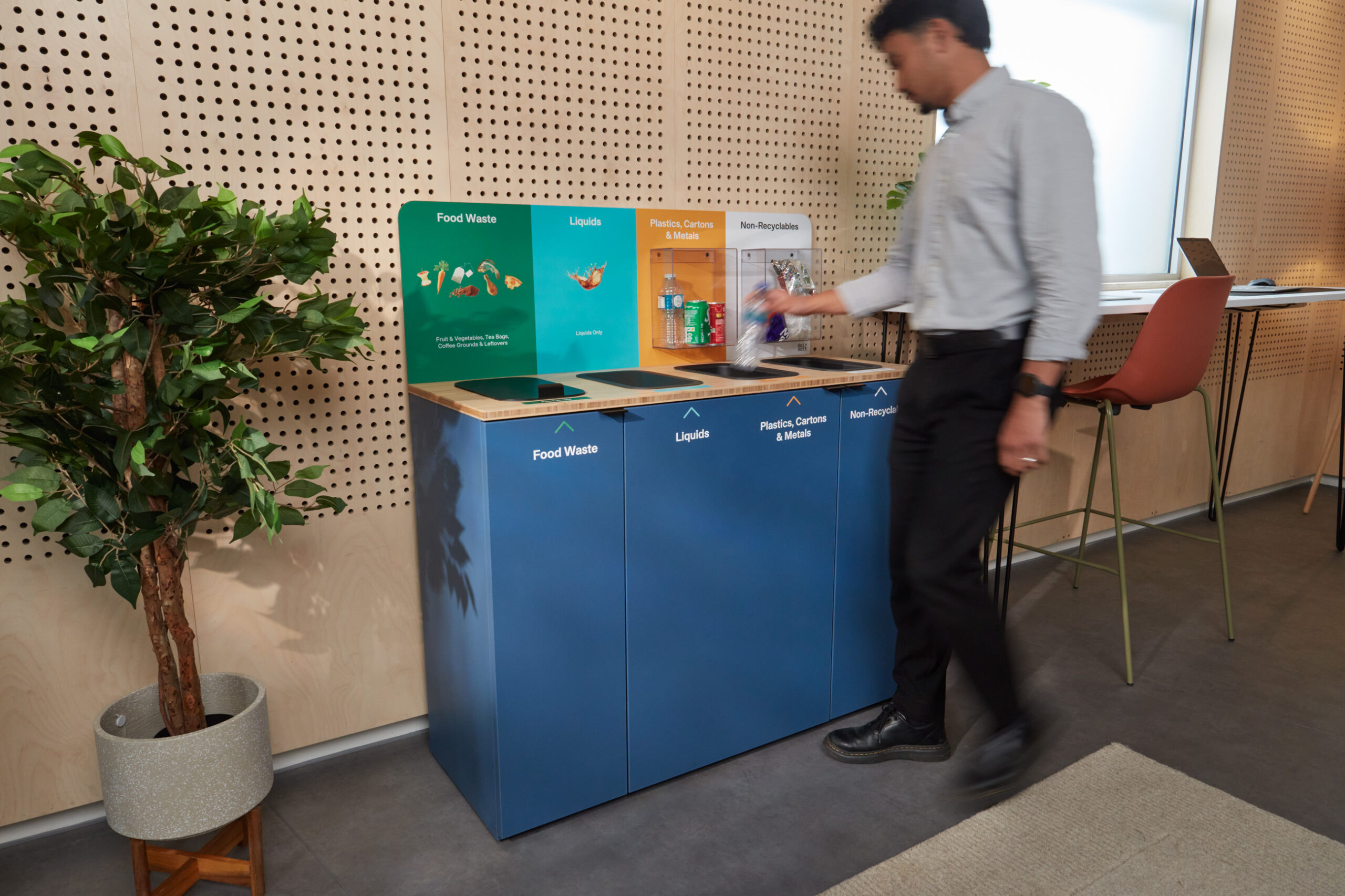
Unisort Aspire Recycling Station
Inconsistency Creates Confusion
As organisations grow, recycling systems can evolve over time.
Different departments purchase different recycling bins.
Signage varies between buildings.
Waste streams change from floor to floor.
Employees moving around the workplace are faced with different recycling setups depending on where they are.
This inconsistency increases uncertainty and can reduce recycling performance.
Maintaining consistent waste stream shapes, colours, signage and layouts across an organisation helps employees recycle with greater confidence wherever they are.
Better Design Supports Better Recycling
Design can have a great influence on recycling behaviour. Employees are more likely to recycle correctly when recycling stations are:
- Clearly labelled
- Easy to recognise
- Consistent across the workplace
- Positioned where waste is generated
- Designed around specific waste streams
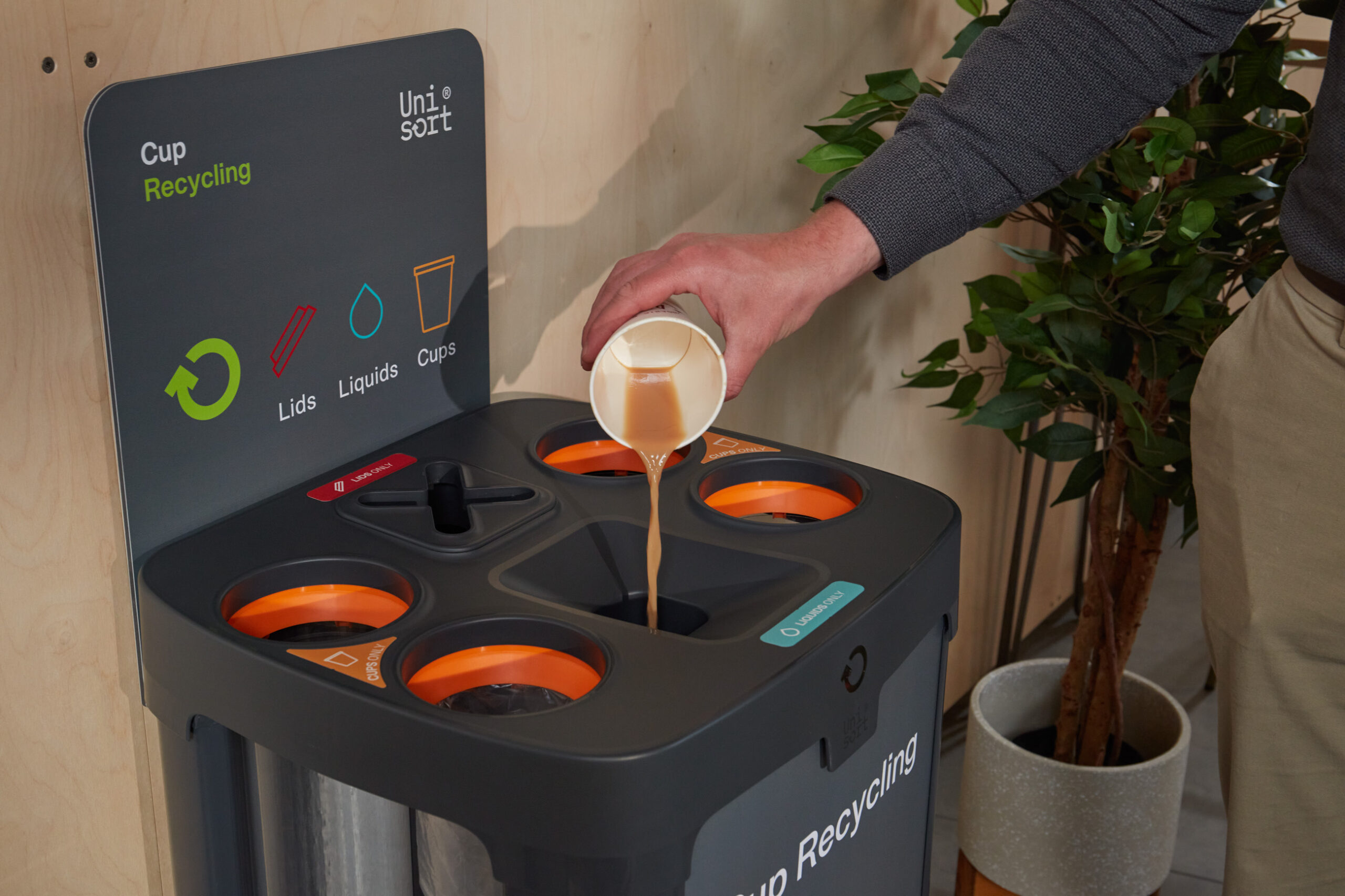
Features such as shaped apertures, colour coding, clear icons and backboards all help reduce guesswork.
Rather than relying on employees to remember recycling rules, the recycling station itself encourages the correct recycling habits.
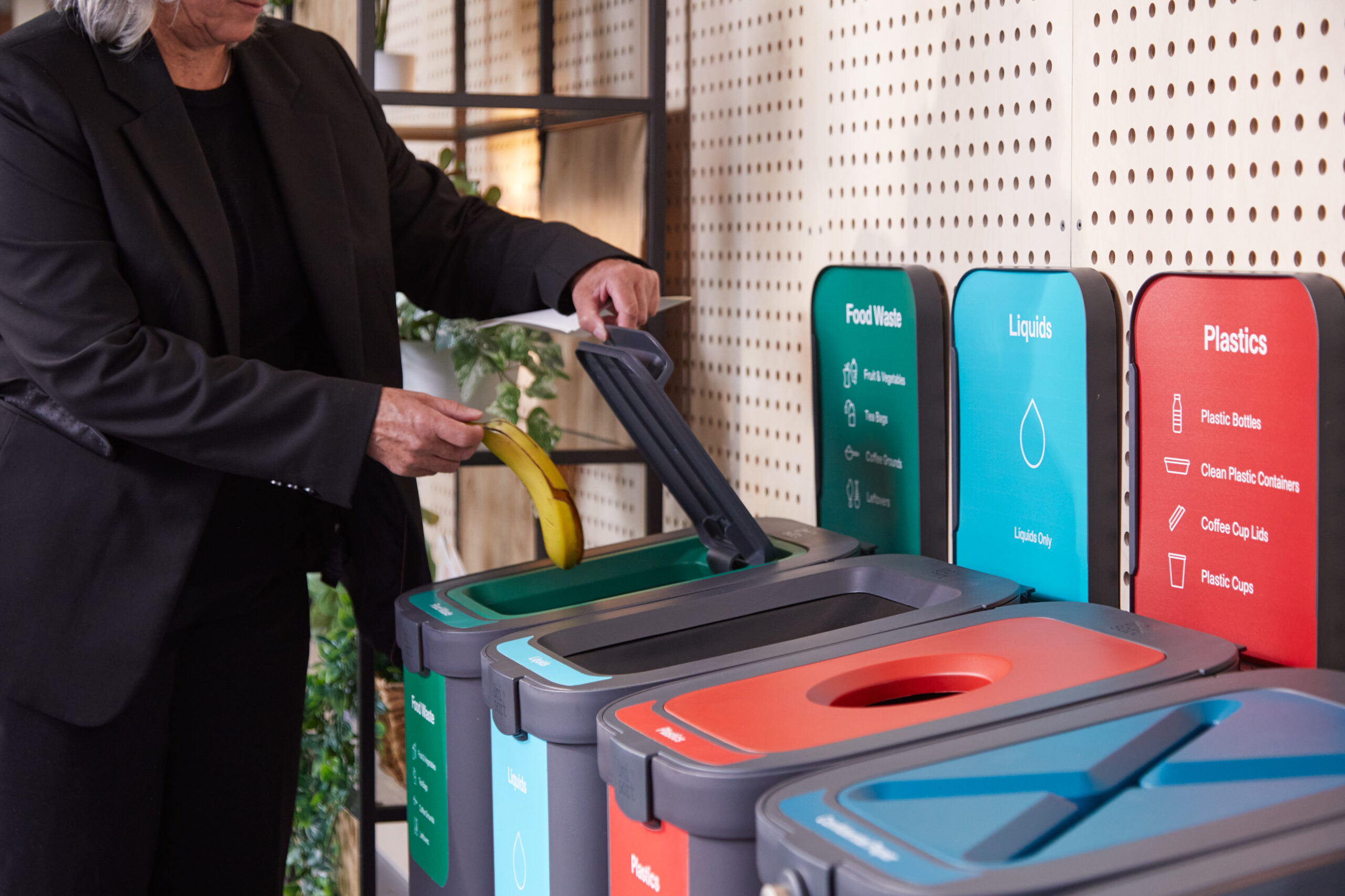
Unisort Climate Recycling Station
Recycling Infrastructure Should Reflect Your Workplace
No two organisations operate in exactly the same way.
Healthcare facilities have different requirements to commercial offices.
Universities experience different waste patterns to hospitality venues.
Industrial facilities generate different materials to corporate headquarters.
Customised recycling stations allow organisations to create recycling systems that reflect their operations, waste streams and workplace environment.
This may include:
- Bespoke waste streams
- Custom colours and finishes
- Building-specific signage
- Branded graphics
- Different capacities
- Specialist waste streams such as liquids, coffee cups, batteries or food waste
The objective isn’t simply to provide more recycling options. It’s to create a recycling system that employees find simple and intuitive to use.
Better Recycling Depends On More Than Recycling Stations
Installing customised recycling stations is only one part of improving workplace recycling.
Long-term success also relies on:WO
- Clear communication
- Employee engagement
- Consistent recycling stations
- Behaviour-led placement
- Ongoing recycling education
As recycling legislation and sustainability expectations continue to evolve, organisations that regularly review both their recycling infrastructure and employee behaviours are more likely to achieve lasting improvements.
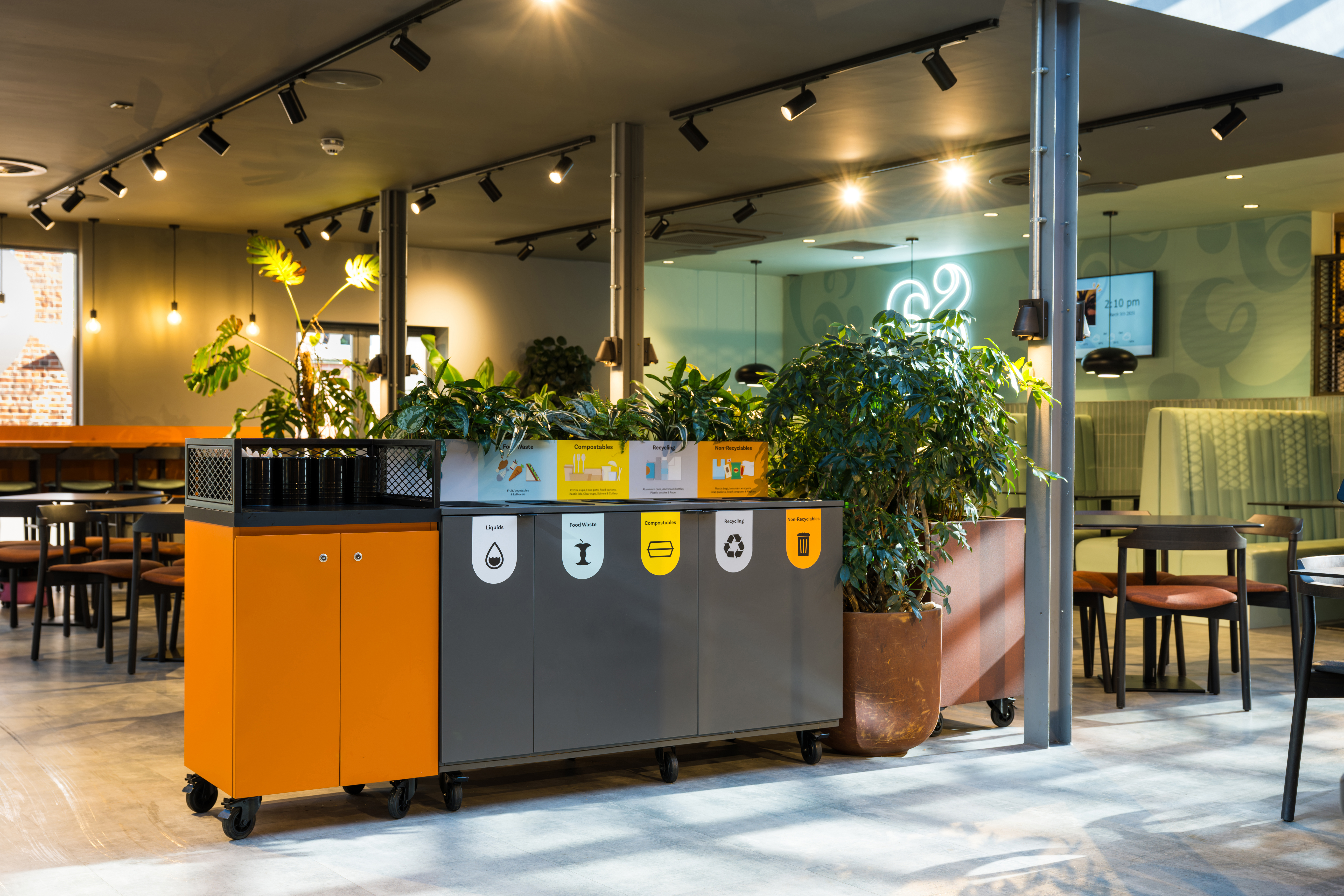
Explore how Wellington College improved recycling usability across the college: https://www.unisort.co.uk/case-study/wellington-college/
Measuring Success Beyond Recycling Rates
Many organisations measure success by the amount of recycling collected.
While this provides useful information, it doesn’t explain why recycling performance improves or declines.
Questions such as these provide greater insight:
- Which recycling stations experience the highest contamination?
- Which locations generate the most recyclable material?
- Where are employees making incorrect disposal decisions?
- Are recycling habits improving over time?
Understanding these trends helps organisations make informed decisions and continuously improve their recycling systems.
Solutions such as Unisort iQ Waste Intelligence provide real-time visibility into workplace recycling behaviour, helping Facilities and Sustainability Managers monitor performance, identify opportunities and support continuous improvement.

Creating Recycling Systems That Work
Facilities rarely struggle because they have too few recycling bins.
More often, they struggle because standard recycling bins haven’t been designed around the way people use large buildings.
When recycling stations are visible, consistent and tailored to the waste generated in each location, employees spend less time guessing and more time recycling correctly.
Small improvements to placement, signage and recycling station design can reduce contamination, improve recycling performance and create workplaces where recycling becomes a natural part of the working day.
As organisations continue to strengthen their sustainability strategies, customised recycling stations provide a practical way to improve recycling behaviour while supporting long-term operational and environmental goals.
If you’re reviewing your current recycling system and would like an independent assessment of where improvements could be made, we’d be happy to help, get in touch.