


Since 31 March 2025, workplaces in England have been required to separate key recyclable materials from food waste and non-recyclable waste before collection.
The rules apply to businesses, charities and public sector organisations, including offices, shops, hospitality venues, schools, universities, hospitals, care homes, factories and other non-domestic premises.
Micro-firms with fewer than 10 full-time equivalent employees have until 31 March 2027 to comply.
For workplaces already in scope, waste must always be separated into three main categories:
- Dry recyclable materials (plastic, metal, glass, paper and card)
- Food waste
- Non-recyclable waste (also called residual waste)
There is separate guidance for waste collectors regarding paper and card. Paper and card should generally be collected separately from plastic, metal and glass. However, where this is not technically or economically practicable, or where separate collection provides no significant environmental benefit, the waste collector can complete a written co-collection assessment allowing these materials to be collected together.
But knowing what can be recycled is only part of the challenge.
Do your employees know what shouldn’t go into the recycling station?
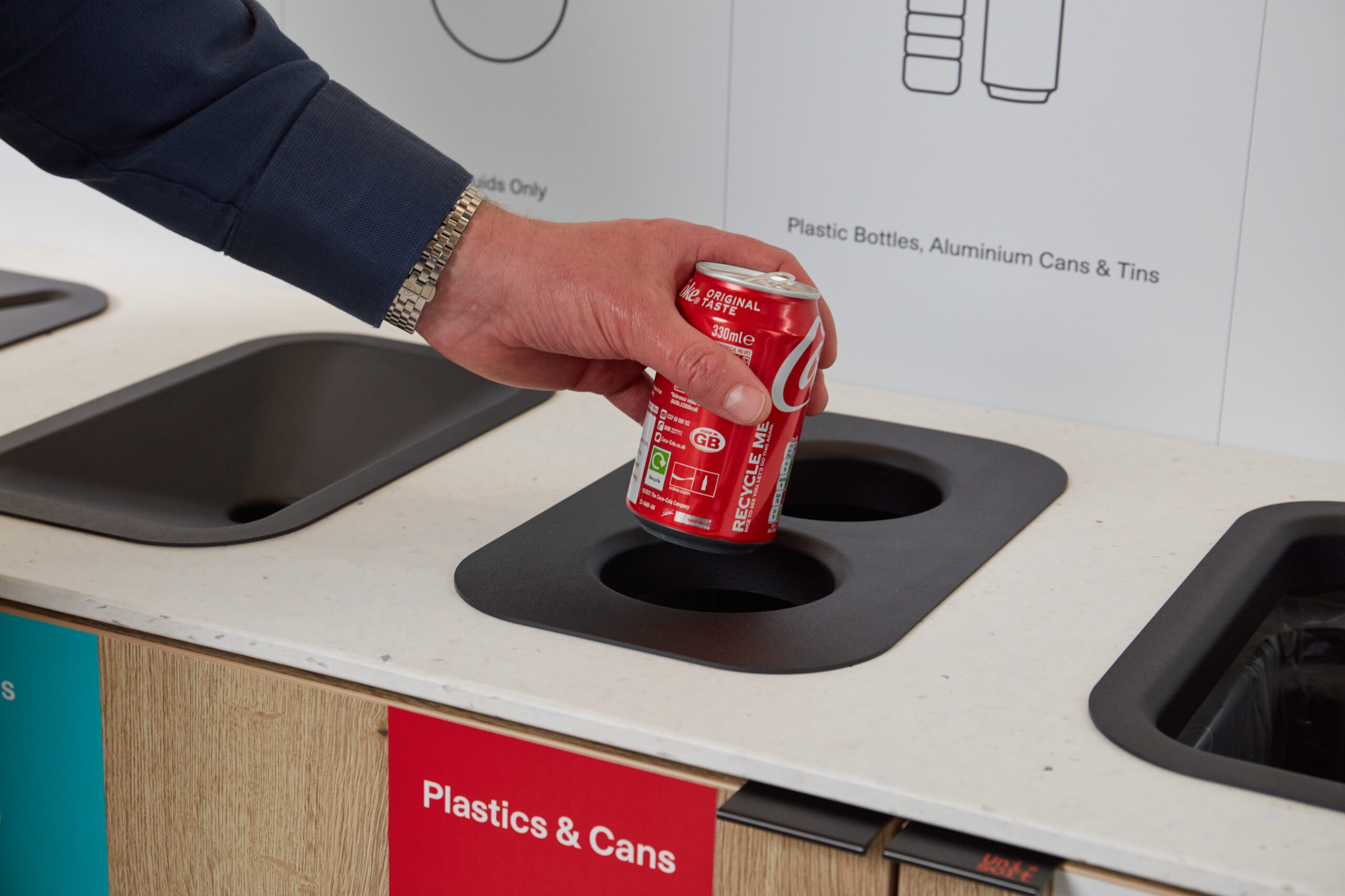
What Shouldn’t Go In Workplace Glass Recycling?
Typical workplace glass recycling includes items such as empty drinks bottles and rinsed food jars.
However, Defra says the following items cannot typically be collected with dry recycling:
- Candles
- Drinking glasses
- Flat glass
- Glass cookware, such as Pyrex
- Light bulbs and tubes
- Microwave plates
- Mirrors
- Vases
- Window glass
- Ceramics, such as crockery or earthenware
This is an important distinction.
Something being made from glass doesn’t automatically mean it belongs in a workplace glass recycling stream.
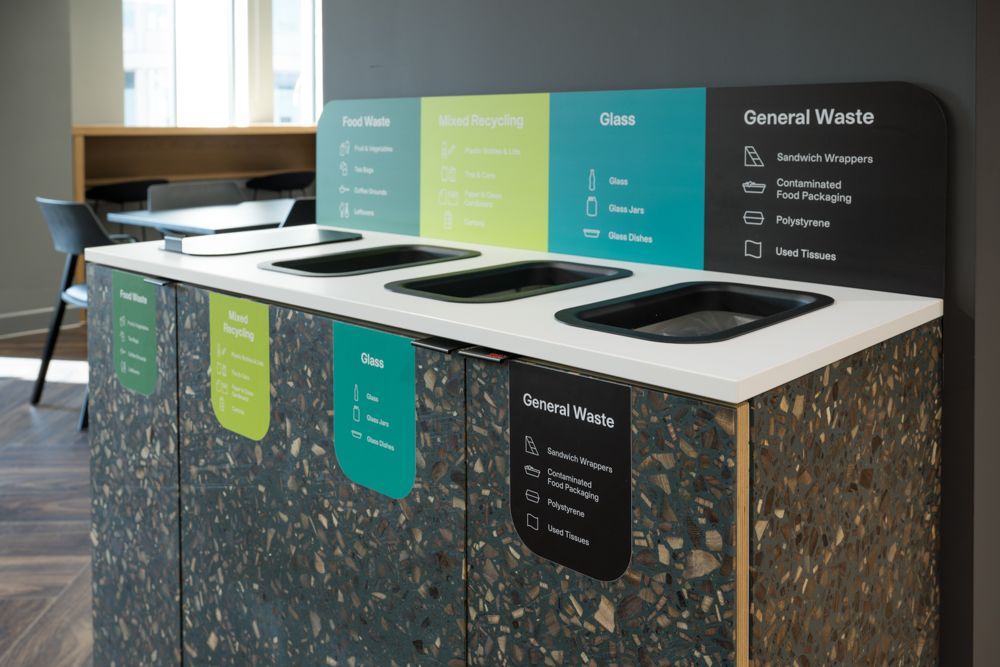
What Shouldn’t Go In Workplace Metal Recycling?
Metal drinks cans, empty food tins, aluminium foil and aluminium food trays are examples of materials that can typically be recycled.
However, workplace metal recycling should not typically include:
- Laminated foil, such as some pet food and coffee pouches
- Electrical items
- Batteries
- Cutlery
- Pots and pans
- Kettles
- Irons
- Pipes
- Packaging that has contained white spirits, paints, engine oils or antifreeze
- Certain aerosol packaging, including spray paint and cooking gas containers
- Waste electrical and electronic equipment, including vapes
Some of these materials require different waste arrangements, particularly electrical, battery or hazardous waste.
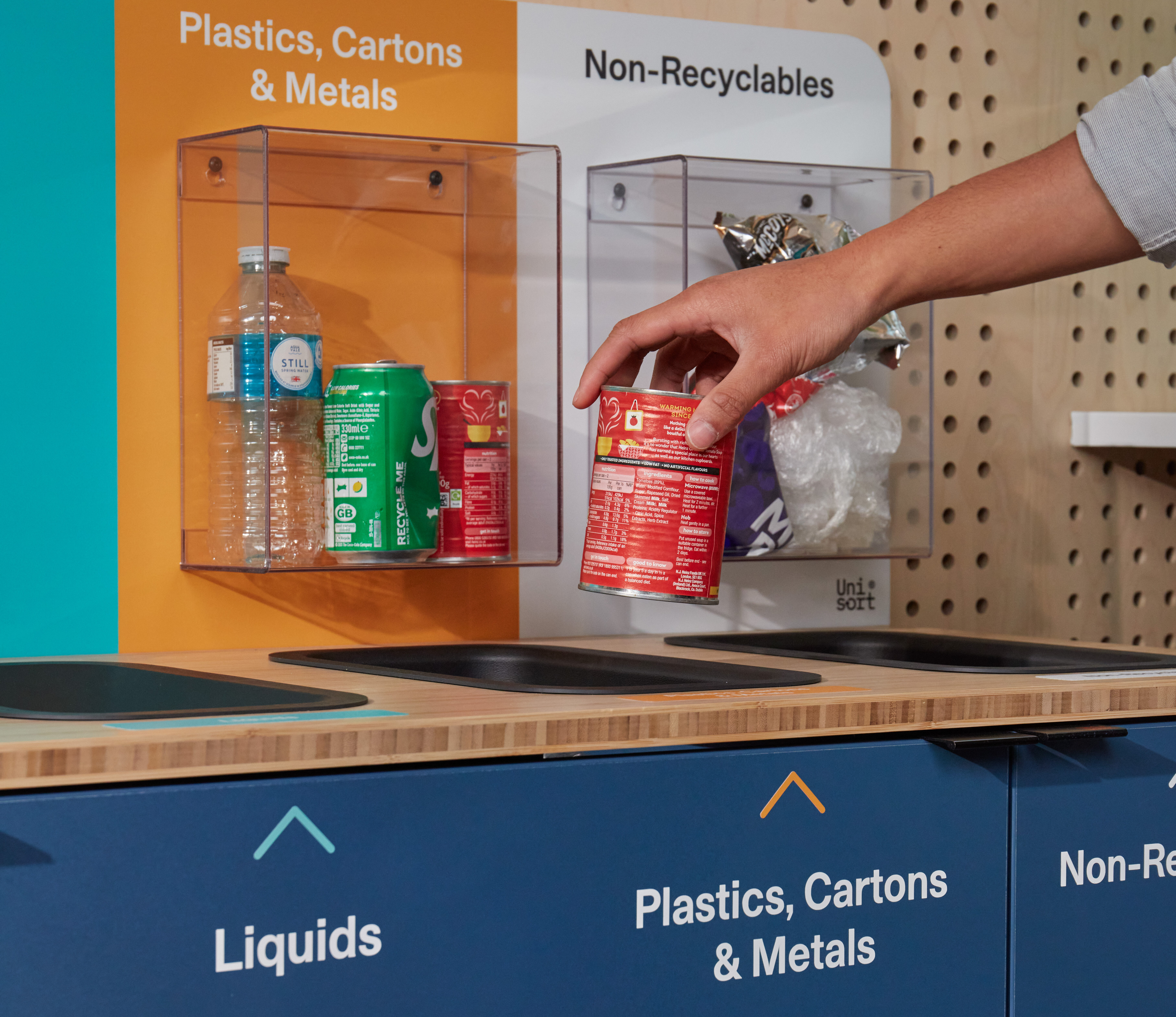
What Shouldn’t Go In Workplace Plastic Recycling?
Plastic can be one of the more confusing workplace recycling streams.
Typical recyclable plastics include rinsed empty food containers, pots, tubs, trays, tubes, bottles and cartons.
According to current workplace guidance, items that cannot typically be collected in dry plastic recycling include:
- Plastic packaging or non-packaging labelled compostable or biodegradable, including coffee pods
- Packaging that has contained white spirits, paints, engine oils or antifreeze
- Contaminated plastic packaging – e.g. food containers
- Expanded and high-impact polystyrene packaging, such as packing beads
- PVC packaging
- Waste electrical and electronic equipment, including vapes
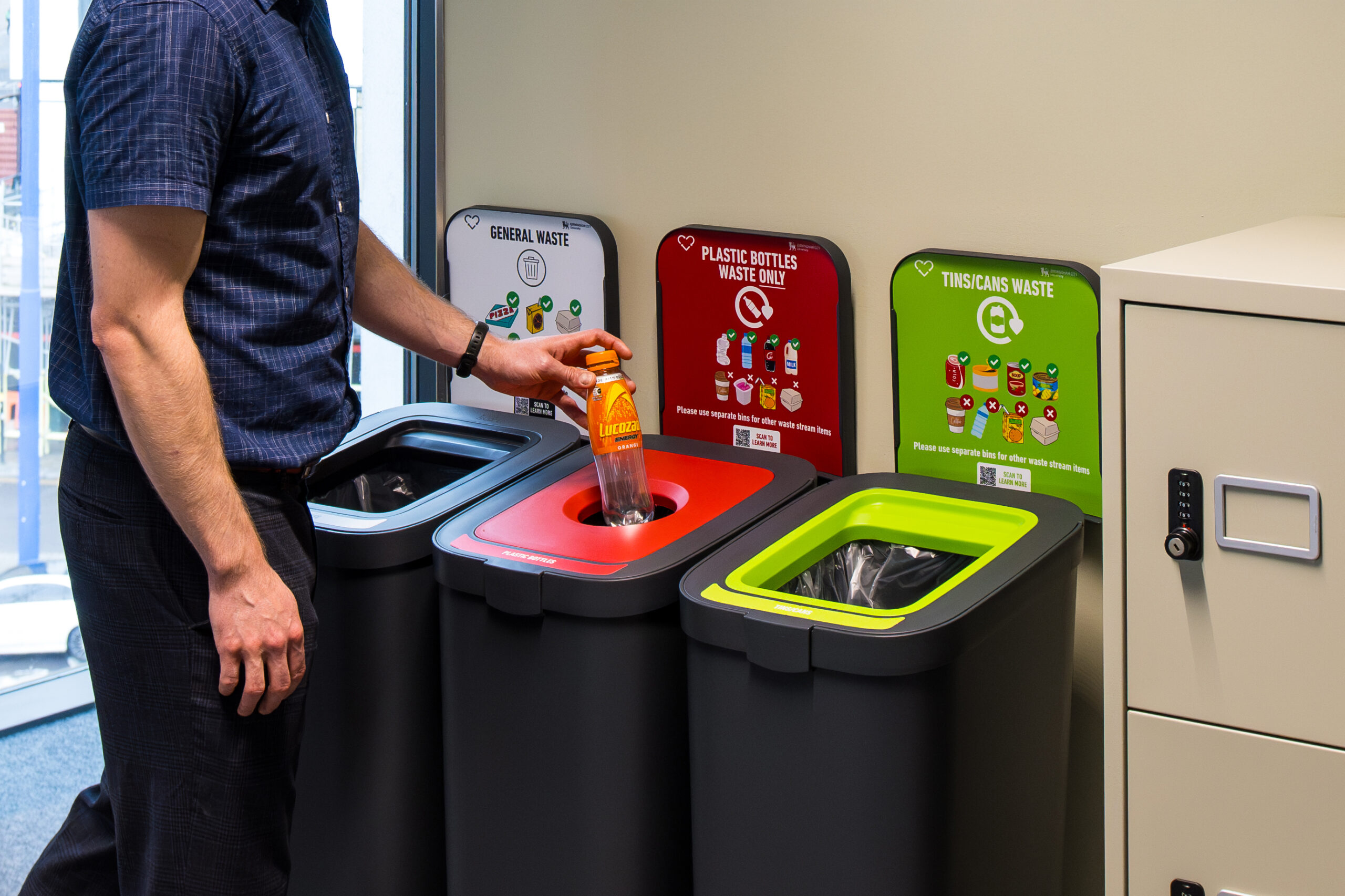
What About Plastic Film And Flexible Packaging?
This is particularly important following the latest change to Simpler Recycling.
Plastic film and flexible packaging were originally expected to become part of mandatory workplace recycling collections from March 2027.
In July 2026, Defra decided to delay mandatory plastic film collections for workplaces in England until 1 April 2030. This includes flexible materials such as plastic bags and film packaging. Different requirements and timescales apply elsewhere in the UK.
For workplaces, the practical message is simple:
Don’t assume flexible plastics belong in your existing plastic recycling stream.
Check the current arrangements with your waste collector and make sure your workplace signage reflects what they actually accept.
Read our guide to the Simpler Recycling plastic film deadline and what it means for workplaces.

What Shouldn’t Go In Workplace Paper And Card Recycling?
Paper and card are common across almost every workplace, but some materials shouldn’t typically enter this recycling stream.
Defra lists the following as unsuitable for paper and card recycling:
- Used tissues
- Used toilet paper
- Absorbent hygiene products, including nappies, period products and incontinence products
- Cotton wool and makeup pads
- Wet wipes
- Paperback books
- Hardback books
Paper and cardboard contaminated with food or liquid may also be unsuitable for recycling, depending on the material and your collector’s requirements.
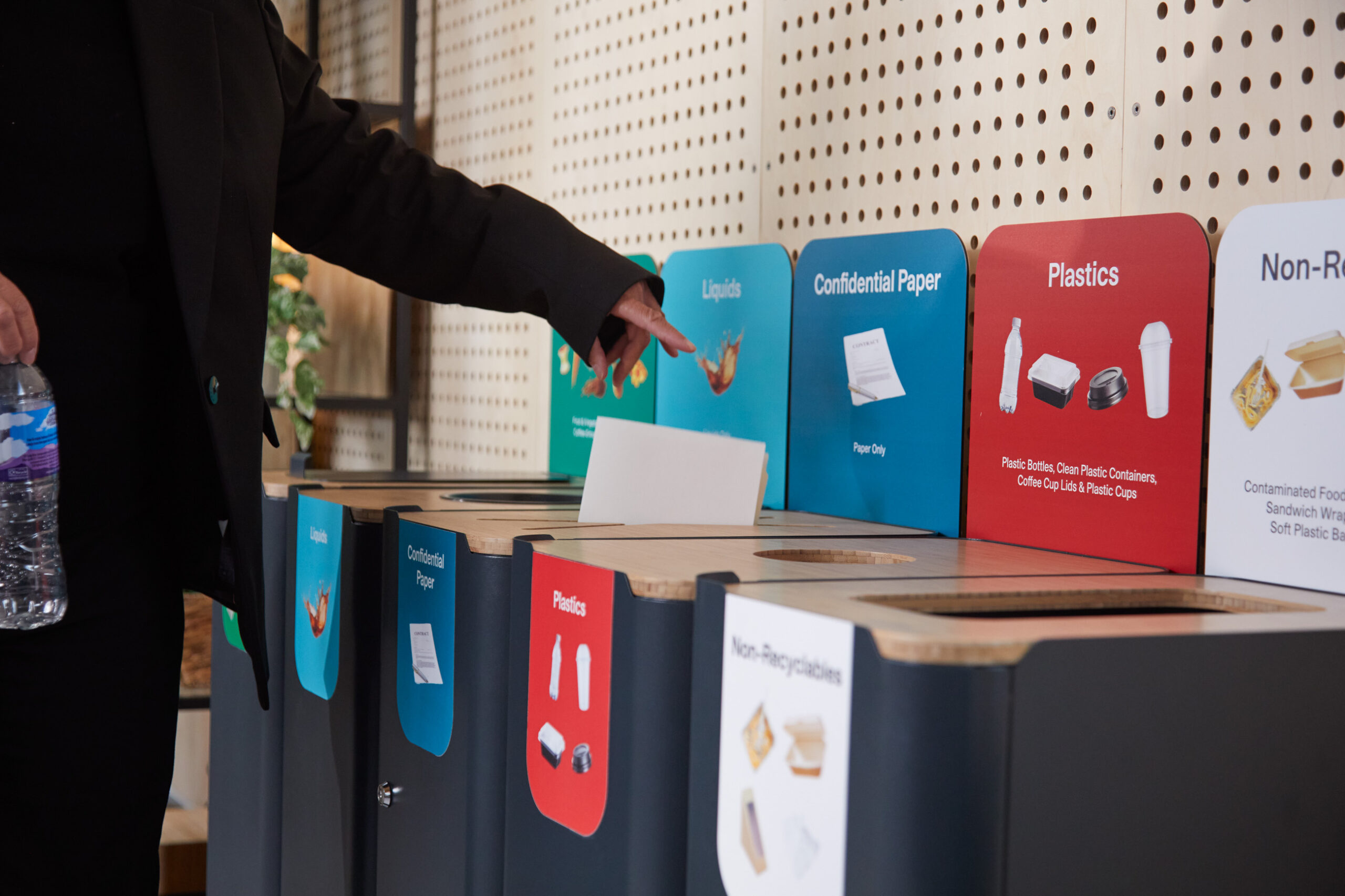
Clear signage around kitchens, washrooms and breakout spaces can be particularly important where recyclable paper sits alongside materials that look similar but require a different disposal route.
What Belongs In Workplace Food Waste?
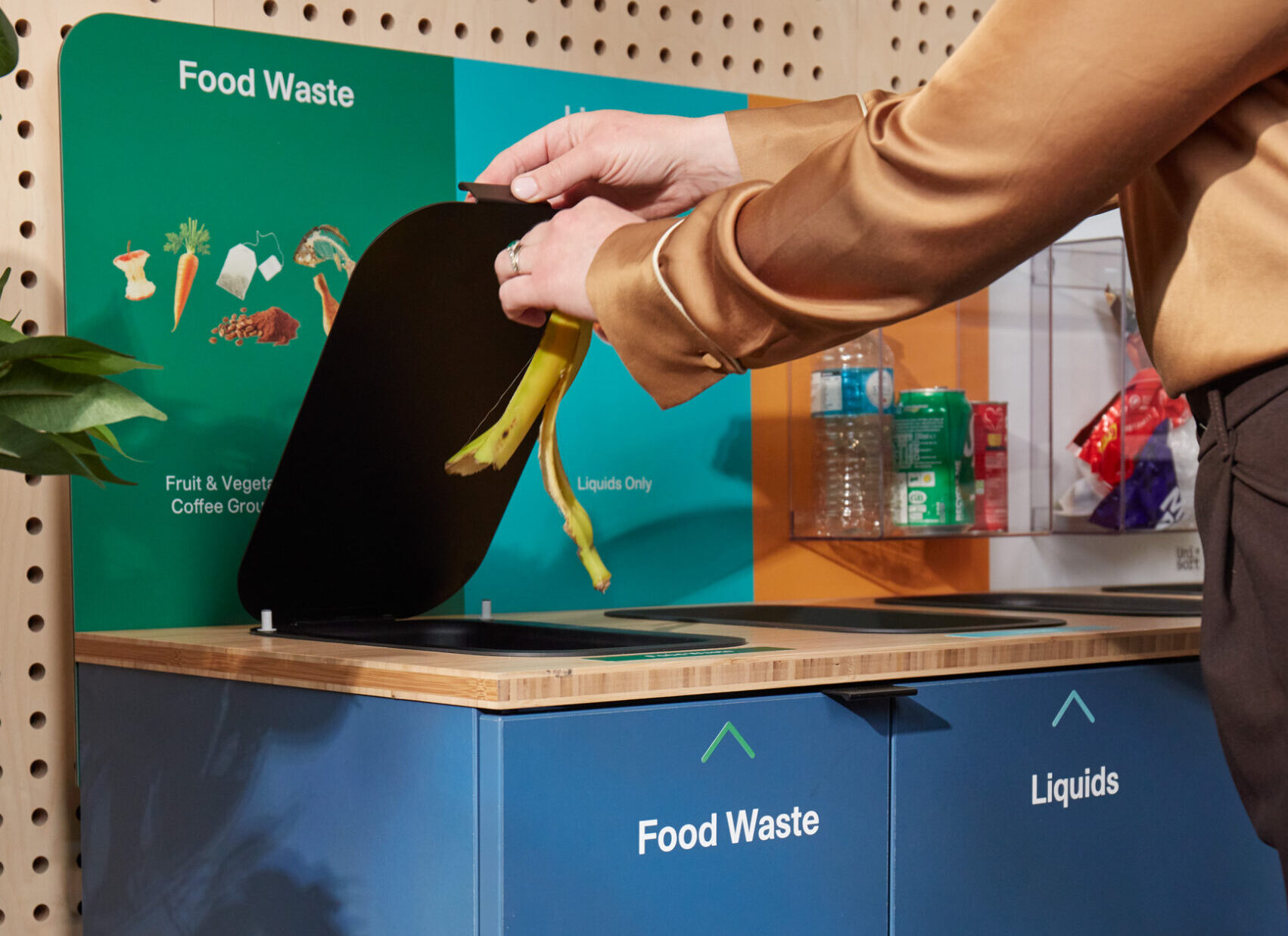
Food waste must be collected separately, even if your workplace doesn’t serve food or have a kitchen and regardless of how little food waste it produces.
Examples include:
- Meal leftovers
- Banana skins and fruit cores
- Coffee grounds
- Tea bags
- Food preparation waste, such as vegetable peelings
Packaging shouldn’t simply follow the food into the food waste stream.
Where employees are expected to separate leftover food from its packaging, the recycling station needs to make that process clear.
What Happens If Recycling Is Contaminated?
Putting the wrong item in a recycling bin isn’t always a small mistake.
Repeated across a large workplace or estate, those individual decisions can create significant contamination.
Defra advises that if significant contamination is identified before collection, the affected recyclable waste should be disposed of as general waste and the issue discussed with the waste collector. Waste collectors may also refuse highly contaminated recycling or charge additional fees because of the additional disposal costs involved.
This is why the recycling station itself matters.
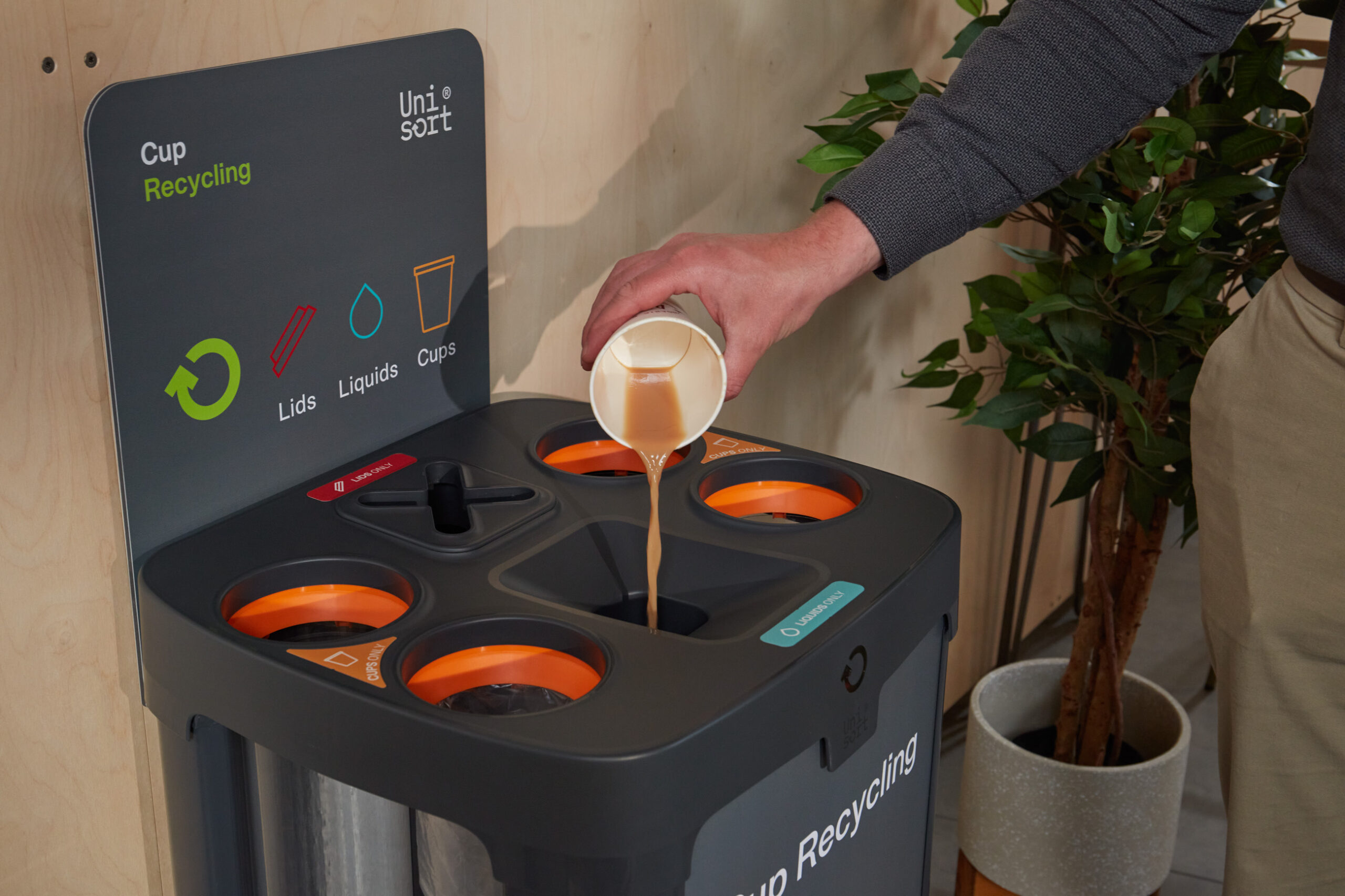
If someone has to stop and work out where an item belongs, there is already an opportunity for the wrong decision to be made.
Clear signage, specific waste streams, shaped apertures and consistent recycling infrastructure can all make correct disposal easier.
Are Your Workplace Recycling Bins Clear Enough?
Take a look at your current recycling stations through the eyes of an employee or visitor.
Could they confidently dispose of:
- An empty drinks can?
- A coffee cup?
- A crisp packet?
- A used tissue?
- A cardboard food box?
- A plastic food tray?
- A battery?
- Leftover food?
If the answer isn’t immediately obvious, the issue may not be employee engagement alone.
The exact setup may vary depending on your waste collector and collection arrangements, but the people using your recycling stations still need to understand where each item belongs.
The system itself may need attention.
This becomes even more important across large estates, where different signage, bins and collection arrangements between locations can create inconsistent recycling behaviour.
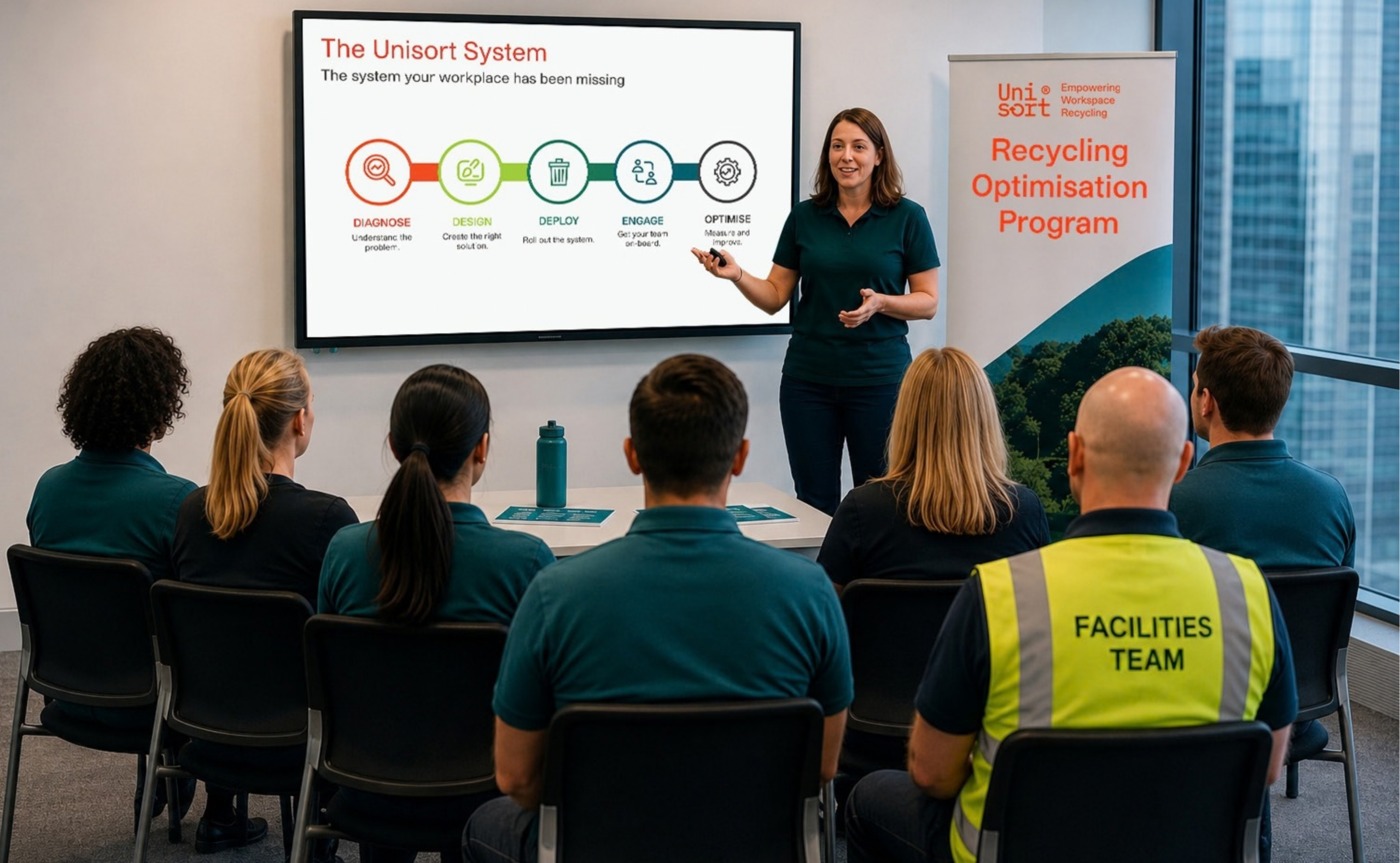
For organisations looking to improve employee understanding, our Workplace Recycling Engagement Training Sessions provide practical guidance around workplace recycling.
Workplace Recycling Is A Legal Requirement
Simpler Recycling isn’t simply best practice.
Businesses and workplaces have a legal duty to manage waste safely and legally. Workplaces that don’t comply with the Simpler Recycling requirements risk receiving a compliance notice from the Environment Agency (EA). Failing to comply with a compliance notice is an offence and may result in enforcement action. Non-compliance can also come at a cost. The EA can charge £118 per hour for regulatory work where a workplace is found to be non-compliant, with the time required for further compliance work adding to the cost.
The Environment Agency also operates a reporting service through which workplace non-compliance can be reported.
That makes it important for Facilities and Sustainability teams to understand both their collection arrangements and what is happening at the point of disposal.
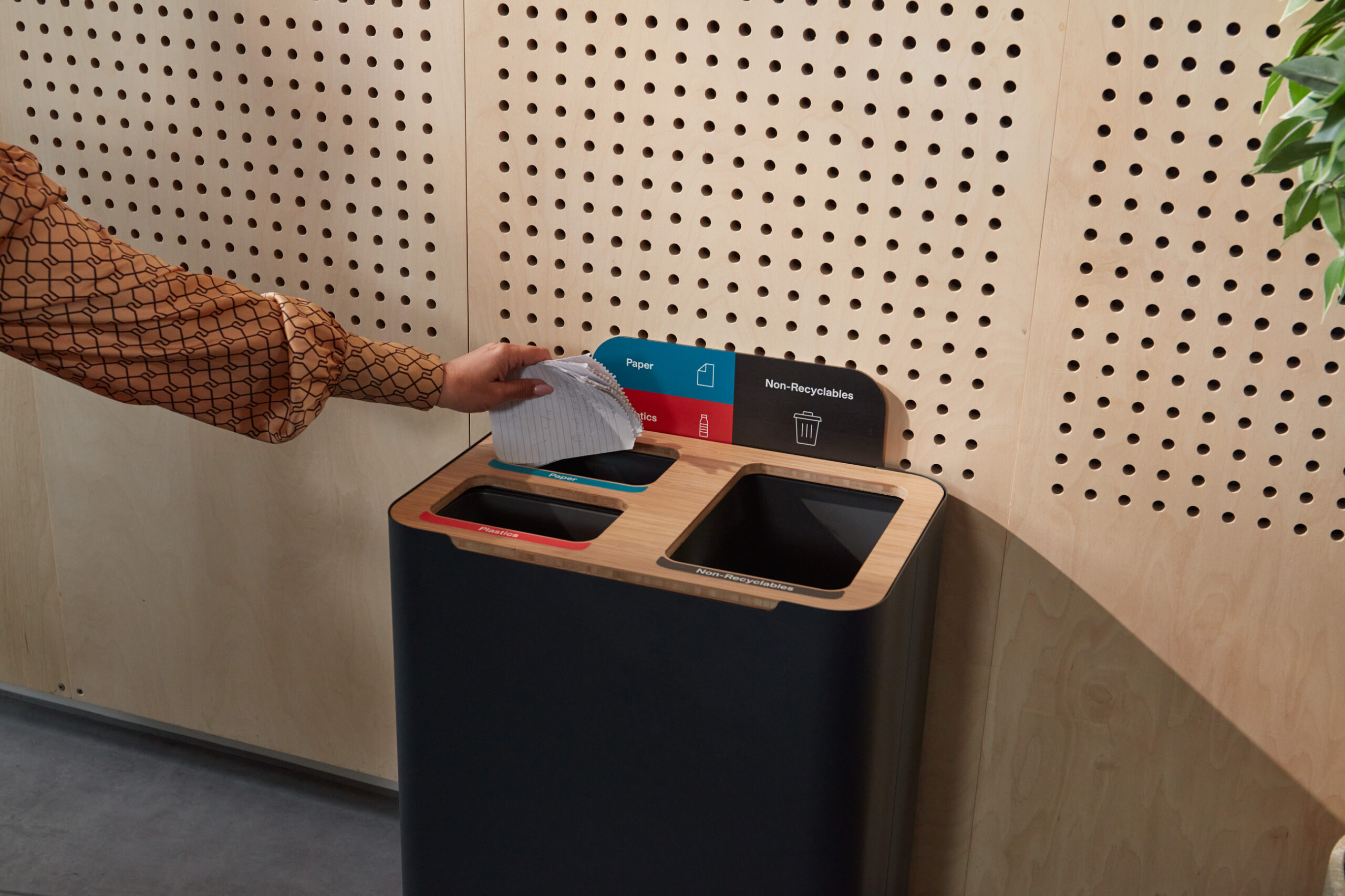
Get Your Workplace Recycling System Right
Knowing what belongs in each recycling stream is important.
Making that choice obvious to everyone using the workplace is what turns the guidance into everyday behaviour.
Review your waste streams. Confirm accepted materials with your waste collector. Check your signage. Look for contamination. Make sure recycling is consistent across your estate.
If you’re unsure how the rules apply to your organisation, our guide to Simpler Recycling for workplaces in England covers the requirements in more detail.
And if your current setup is creating confusion, contamination or inconsistent recycling across your workplace, speak to Unisort about making the right disposal choice clearer.